
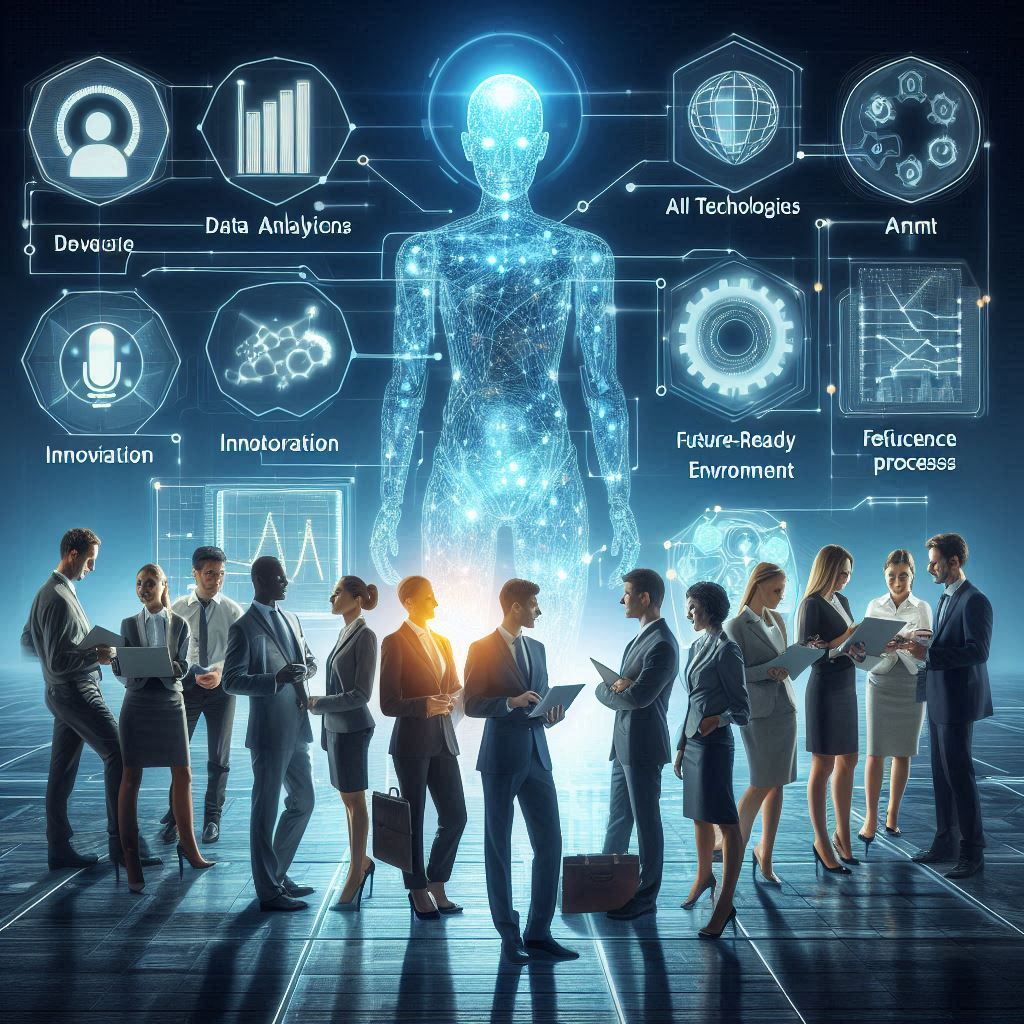
From my perspective, human oversight remains essential. AI can drive efficiencies, but people continue to shape strategy, define culture, and build trust. I believe that the future of talent acquisition lies in a balanced approach where AI enhances but does not replace human expertise.
With that in mind, I’ve attempted to outline a future state AI-Enabled Talent Acquisition Team and the roles within that integrates AI while retaining human leadership, oversight and management.
AI-Enabled Talent Acquisition Team Structure
The structure and roles are designed to integrate AI to maximise efficiencies, enhance decision making and leverage data effectively, while ensuring a powerful balance between automation and human expertise.
Strategic Talent Leader (Head of Talent Acquisition)
Define Talent Strategy: Develop a forward-thinking talent strategy that fully integrates AI to optimise workforce planning, talent pipelines, and business alignment.
Enable Human-AI Collaboration: Design a functional model where AI complements human expertise, emphasising relationship-driven hiring and strategic decision-making.
Drive Business Alignment: Partner with executives and department heads to ensure talent acquisition aligns with long-term organisational strategy, workforce planning and skill evolution.
Oversee AI & Data Governance: Ensure AI tools used are ethical, compliant, and effective, mitigating risks related to bias, privacy, and regulatory compliance.
Design Tech Stack: Continuously evaluate AI-driven sourcing, assessment, and automation tools, ensuring their applicability and effectiveness in delivering high-quality talent.
Define Strategic Talent Outcomes: Shift focus from traditional recruiting metrics to long-term indicators such as workforce agility, internal mobility, and AI-driven efficiency gains.
Data-Driven Talent Scout (Talent Sourcing Lead)
AI-Powered Market Intelligence: Use AI to analyse labor market trends, competitor hiring patterns, and emerging skill demands to build proactive hiring strategies.
Precision Talent Mapping: Leverage AI to identify, engage, and pipeline top talent from internal and external talent pools, focusing on strategic hires.
Optimise Sourcing Algorithms: Partner with data teams to refine AI models, ensuring candidate recommendations align with business needs and any diversity aspirations.
Enhance Passive Talent Engagement: Use AI-driven insights to predict when high-value candidates may be open to new opportunities and engage them at the right time.
Leverage Predictive Analytics: Identify skill shortages and future workforce needs, ensuring a proactive rather than reactive approach to hiring.
Workflow Strategist (Recruitment Operations)
Automate and Streamline Hiring Workflows: Implement and refine AI-powered recruitment automation, including chatbots, resume screening, scheduling and assessment.
Optimise Tech Stack: Ensure technology and AI-driven hiring tools function efficiently and effectively to provide high-quality outputs.
Ensure AI Fairness and Accuracy: Continuously test AI tools for accuracy, efficiency, and bias prevention, collaborating with the AI Ethics & Compliance Specialist.
Monitor Performance KPIs: Track AI-driven hiring metrics, including predictive quality of hire, candidate conversion rates, and process efficiencies.
Drive AI Training: Ensure all team members understand how to maximise AI tools while maintaining human oversight and decision-making.
Talent Experience (Employer Branding & Engagement)
Data-Driven Employer Branding: Use AI to analyse talent perception and engagement data and refine employer brand messaging across digital platforms.
Hyper-Personalised Candidate Communication: Leverage AI to tailor outreach strategies based on candidate aspirations, skills, experience and engagement patterns.
Optimise Job Adverts and Content: Utilise AI to refine job postings, ensuring they are inclusive, engaging, and optimised for searchability.
AI-Enhanced Candidate Experience: Oversee AI-powered engagement tools (e.g., chatbots, automated follow-ups) and balance with a human touch.
Drive Talent Community Growth: Use AI to manage and nurture talent communities, keeping potential candidates engaged before hiring needs arise.
Hiring Consultants (Recruiters)
Combine AI Insights with Human Judgment: Use AI-ranked candidate lists as a starting point while applying a human touch to assess cultural fit and potential.
Personalised Candidate Interaction: Conduct high-touch candidate engagement, focusing on long-term career fit.
AI-Enhanced Assessments & Interviews: Utilise AI-driven behavioral assessments and structured interview frameworks to ensure consistency and fairness.
Partner with Hiring Managers: Collaborate with department leaders to refine AI hiring models, ensuring they align with evolving business needs.
Champion Ethical AI Hiring: Ensure AI-driven recommendations are reviewed critically and that human oversight remains integral to decision-making.
Skills Intelligence Analyst (Workforce Planner)
Predict Future Skills Demand: Use AI to analyse industry trends, workforce planning data, and internal skills gaps to forecast hiring needs.
Design Skills-Based Hiring Models: Shift recruitment focus from rigid job descriptions to adaptable skill profiles, ensuring long-term workforce agility.
Enable Internal Talent Mobility: Implement AI-driven career pathing tools to support reskilling, upskilling, and internal promotions.
Align Hiring with L&D Programs: Work closely with Learning & Development teams to ensure hiring strategies align with skill development pathways.
Drive a Continuous Talent Supply Chain: Develop strategies to maintain a steady flow of skilled internal talent, reducing reliance on external hiring.
Ethics & Compliance Specialist (Responsible AI Guardian)
Monitor AI Bias & Fairness: Conduct regular audits of AI hiring models to detect and mitigate algorithmic bias.
Ensure Regulatory Compliance: Stay ahead of evolving laws and guidelines on AI in hiring, ensuring all tools and processes meet legal standards.
Transparency in AI Hiring Decisions: Implement explainability measures so hiring teams and candidates understand AI-driven recommendations.
Educate & Train Talent Teams: Develop training programs to ensure recruiters, hiring managers, and executives understand responsible AI use in hiring.
Legal & HR Liaison: Partner with legal and HR teams to ensure AI aligns with company policies and external regulations.
Why do I think this future structure works?
This structure positions the talent acquisition function as a strategic business enabler, leveraging AI for efficiency while maintaining the human expertise necessary for impactful hiring decisions.
AI-Driven Efficiency: Reduces manual workload, accelerates processes, and enhances decision-making.
Human-Led Strategy & Relationships: Recruiters focus on high-value engagement while AI handles automation.
Forward Looking Talent Acquisition: Ensures hiring strategies align with business growth and workforce transformation.
AI Ethics & Compliance at the Core: Prevents bias, ensures legal compliance, and promotes responsible AI use.
The future isn’t about choosing between AI and human expertise—it’s about leveraging both to create a more efficient and effective function. AI will continue to optimise efficiency, data utilisation, and decision-making, but it will be complemented with human insight to achieve the best outcomes. I do believe that organisations who take the lead and strike the right balance will gain an advantage through building agile, future-ready teams while maintaining the personal and human connection at the heart of their processes.
Then again it may never happen or look totally different! Let's see.